
TMJ Treatment Options in NW Calgary, AB
TMJ Treatment Options Near You
When jaw pain persists, it is understandable to want a clear treatment. Temporomandibular disorders, or TMDs, are not one condition with one solution. Care depends on whether the concern involves a joint, chewing muscles, a dental problem, an injury, or another source of facial pain. At Northwest Dental Centre, we discuss TMJ treatment options in NW Calgary, AB after assessing what may be contributing to your symptoms.
If you are looking for TMJ treatment options near you, we will explain which choices are reasonable and when another professional should be involved.

Why Treatment Should Match the Diagnosis
Jaw pain, stiffness, locking, and painful joint sounds can have different causes. Headaches, facial pain, and neck tension may not be related to a TMD. Treatment should not begin with the assumption that every symptom comes from the bite.
Some TMD symptoms improve with time or simple care. Painless clicking often needs no treatment. Persistent pain, limited opening, locking, an injury, or worsening symptoms require closer attention.
We begin with conservative, reversible options when they fit the findings, then review how you respond.
How We Choose a Starting Point
When we consider TMJ treatment options in NW Calgary, AB, we follow a careful process:
Clarify the symptoms
We ask where discomfort occurs, when it began, what affects it, and what you have tried.
Rule out dental causes
We check for infection, fractures, damaged restorations, or another dental source of pain.
Assess jaw function
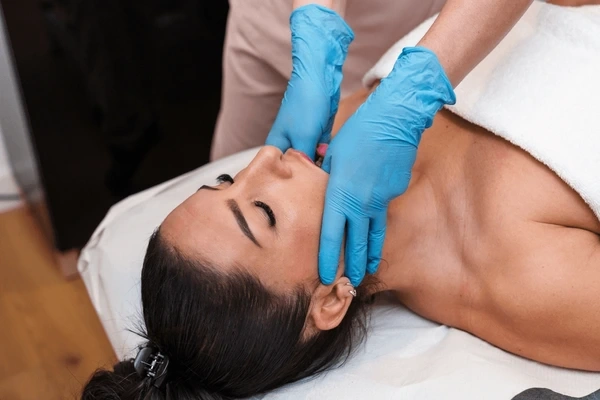
We examine movement, tenderness, joint sounds, locking, and how comfortably you can open your mouth.
Review relevant factors
We consider your injuries, health conditions, medications, sleep, and daily habits.
Use records selectively
We recommend imaging only when it can answer a specific question.
Explain our findings
We discuss what may be contributing, what remains uncertain, and which next step is proportionate.
Our dentist in NW Calgary, AB will explain when medical evaluation, physiotherapy, or orofacial pain care is advisable.
Conservative Options That May Help
At Northwest Dental Centre, we discuss TMJ treatment options near you based on your symptoms and our findings. Early care may include:
Monitoring mild symptoms
Treatment may not be necessary when discomfort is improving and jaw function is normal.
Resting the jaw temporarily
Softer foods and avoiding gum chewing or very wide opening may reduce irritation.
Becoming aware of habits
Noticing clenching, nail biting, or repeated jaw activity can help reduce strain.
Using heat or cold
We may explain when either may be suitable and how to use it safely.
Considering physiotherapy
A physiotherapist with relevant training may help with movement and muscle function.
Discussing pain relief
A dentist, physician, or pharmacist can advise you based on your health history and medications.
These measures are not interchangeable. We will explain what is appropriate for your situation.
What a Dental Appliance Can and Cannot Do
An intraoral appliance, sometimes called a splint or nightguard, fits over the teeth. It may protect vulnerable teeth or restorations and support conservative care in selected cases.
An appliance cannot guarantee that clenching, grinding, headaches, or jaw pain will stop. It should not create a permanent bite change. We monitor its fit, the teeth, the bite, and your symptoms. Contact us if it increases pain or changes how your teeth meet after removal.
Not everyone with a TMD needs an appliance. Its purpose should be clear before treatment begins.
When Additional Care May Be Considered
Persistent or complicated symptoms may require more than one discipline. We may coordinate with a physician, physiotherapist, sleep physician, or orofacial pain clinician.
Injections and other procedures are sometimes proposed, but their evidence and risks vary. Botulinum toxin is not a routine or guaranteed solution. Before an injection or invasive procedure, we explain the reason, alternatives, uncertainties, and possible side effects.
Orthodontic or restorative care may be appropriate for a separate dental problem or damaged teeth. It is not a routine TMD cure. Permanently reshaping teeth or changing the bite for unexplained jaw pain can make symptoms worse.
Reviewing Progress and Protecting Dental Health
When we recommend one of the TMJ treatment options in NW Calgary, AB, follow-up shows whether function and comfort are improving. We also check for tooth wear, restoration damage, bite changes, and appliance problems.
If the first approach is not helping, we reconsider the diagnosis rather than simply adding treatment. The plan may be adjusted, paused, or redirected to another provider, helping us avoid unnecessary changes to healthy teeth.
Request a TMJ/Airway Consultation
If you are exploring TMJ treatment options near you, call (403) 282-7933 or email [email protected] to request a TMJ/Airway Consultation with an experienced dentist near you. Northwest Dental Centre is located at 3604 52 Ave NW, #206, Calgary, AB T2L 1V9, Canada.
Frequently Asked Questions
Will TMD symptoms go away on their own?
Some mild symptoms improve with time and conservative care. Persistent or worsening pain, locking, or limited range of motion should be assessed.
Does everyone with jaw pain need a nightguard?
No. A nightguard is not suitable for every cause of jaw pain. We recommend one only when its purpose and expected benefit are clear.
Is botulinum toxin a routine treatment for TMD?
No. Evidence for its use in TMD remains limited, and results are not guaranteed. It requires an appropriate diagnosis and discussion of risks, alternatives, and limitations.
Can changing my bite cure a TMD?
There is no reliable evidence that permanently changing the bite routinely resolves TMD symptoms. Irreversible treatment should not be used simply to address unexplained jaw pain or headaches.